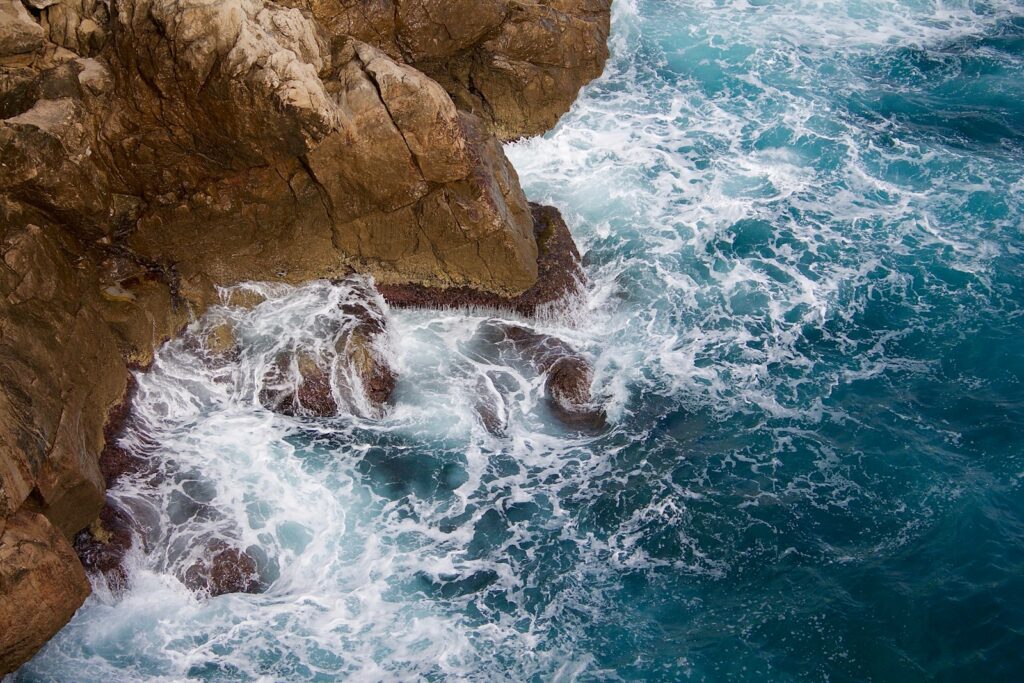
The bura and the jugo are the two winds that run the weather in Dalmatia, and they are opposites. The bura is a cold, dry, gusty wind that falls off the mountains from the north-east: it scours the sky until the islands look cut out of paper, drops the temperature, and covers the sea in whitecaps. The jugo comes from the south-east, warm and humid, and it brings cloud, rain and a long heavy swell — along with, locals will tell you, headaches and short tempers. Learn to tell them apart and you can read a Dalmatian day before you open the shutters, including the only question that matters in practice: is the boat going?
The bura: cold, clear, and photogenic
The bura arrives suddenly and behaves like something falling rather than blowing — it pours down off the coastal mountains in gusts, and it is at its strongest in winter. Its gift is visibility. On a bura day the air is scrubbed and the light is glassy; you can see islands from Marjan that are normally a rumour, and the whole coast is absurdly sharp. Its cost is cold and noise: shutters bang all night, and the sea turns white and mean. Dress for ten degrees less than the number says, keep to the sheltered side of the streets, and go up Marjan for the view of your life.
The jugo: warm, wet, and blamed for everything
The jugo — also called široko, the same word family as sirocco — is the grey one. It comes up from the south-east over a long fetch of open sea, so it arrives humid and pushes a heavy swell onto the coast; the rain that comes with it is warm rain. Along this coast the jugo is a recognised social phenomenon: people sleep badly, argue more, blame their headaches on it, and describe themselves as “under the jugo”. There is a well-worn story that the old Republic of Dubrovnik preferred not to make decisions while it blew. Treat that as folklore with a point — this is a wind that gets inside the day.
The maestral: the one you came for
The summer hero. The maestral is a north-westerly that gets up late in the morning, builds through the afternoon, and dies away at dusk — a reliable, cooling sea breeze that is the entire reason a Dalmatian August is survivable, and the reason the sailing here is famous. If you have ever wondered why the coast feels bearable at four o’clock when the thermometer says otherwise, that is the maestral. Our guide to the summer heat is built around it.
Two more worth knowing
The burin is the maestral’s night shift: a light land breeze that comes off the hills after dark in summer, cool enough to sleep in with the window open. The garbin comes from the south-west and can turn up as a sudden squall on a hot afternoon — flat sea, then a black line on the horizon, then everybody hauling in umbrellas. If you are on a small boat, the garbin is the one to respect. All these names, incidentally, came off the Venetian compass rose; the wind vocabulary here is older than the ferry timetable by several centuries.
What the wind means for your ferry
This is the practical part. Strong wind cancels the fast catamarans first — they are light and passenger-only, and the operators pull them early. The big car ferries are far more resilient and usually keep running, sometimes on a reduced service. A serious bura is the classic reason an island day trip evaporates; jugo swell can do it too. So: if the forecast is windy and you have one shot at Hvar or Vis, take the car ferry rather than the catamaran, go early, and check the operator’s site the same morning. Our ferry port guide explains how the terminal works.
Swimming, and when not to
The bura makes the water cold and choppy but clear; the jugo makes it warm, murky and rough, with an undertow near the beaches — that is the one to skip. On a jugo day, use a sheltered cove on the other side of the peninsula instead of the exposed south-facing beaches; our swimming guide gives you the options. And a general note for shoulder-season visitors: pack a windproof layer, not just a jumper. Our packing list says the same thing at more length.
Reading the day from the window
After a few days you will do this automatically. Sharp light, cold air, banging shutters, white sea: bura — go up high, take a jacket, expect cancelled catamarans. Soft grey sky, warm damp air, big slow swell, everyone slightly irritable: jugo — take the museums, a long lunch and no boats. Still morning turning into a breezy afternoon: maestral — that is a beach day. From our apartments in Veli Varoš you can hear which one it is before you get up, which is a small pleasure and, on ferry mornings, useful information.