Most travellers come to Split with a single food agenda: seafood. Octopus salad on the Riva. Black risotto. Whole grilled fish by the kilo. It’s good — and locals eat it too — but it’s also the small part of what Dalmatia eats. Walk a few streets inland and you’ll find a parallel kitchen that runs on meat, slow fire, and patience.
Janjetina ispod peke
The local trophy meal. Lamb, potatoes and rosemary go under a heavy iron bell, the bell goes under hot coals, and three hours later somebody lifts the lid and the whole konoba turns toward it. Order a day in advance at any village konoba off the coast road — it’s not a fast lunch, it’s a four-hour Sunday. The hill villages above Split (Klis, Dugopolje, Sinj) are where locals actually go for this.
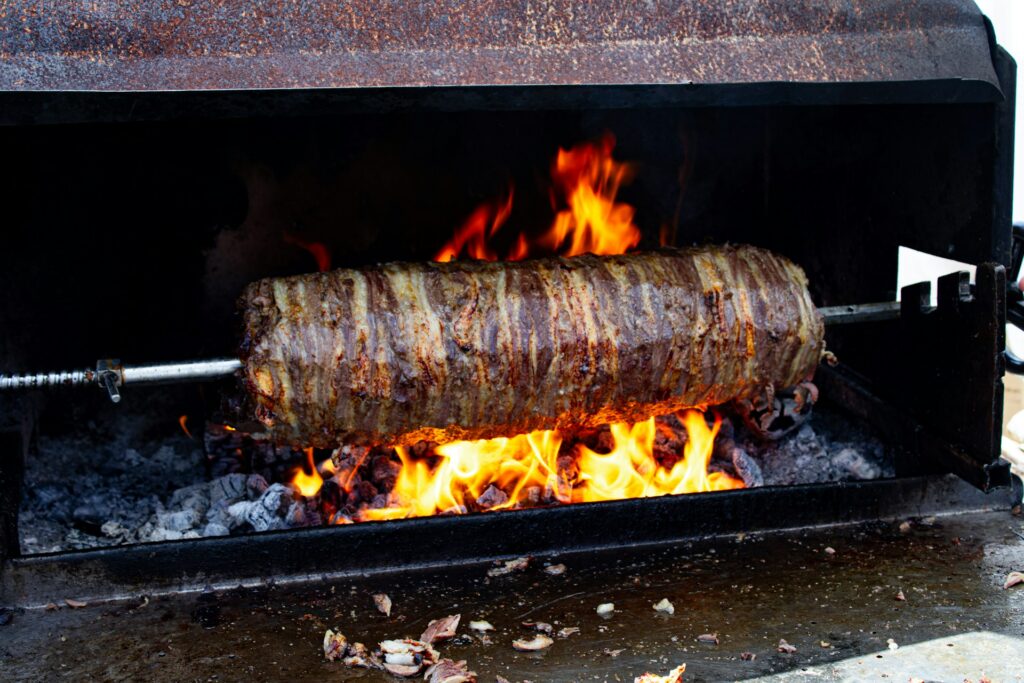
Janjetina na ražnju
Spit-roasted lamb, turning slowly over a wood fire by the side of the highway. From May to October you’ll see the smoke before you see the sign. The drill: stop, point at a leg, get a paper plate, eat with your hands at a plastic table with a glass of bevanda (red wine cut with water). Locals drive an hour for the good ones near Trilj or Triljska Cesta. Combine with a Klis fortress visit if you’re going by car.
Pašticada
Dalmatia’s most-effort beef dish. Marinated for two days in red wine, vinegar and prunes, then braised slowly with cloves and bacon until the sauce is almost black and the meat falls apart at the look of a fork. Served on house-made gnocchi (njoki). This is the dish Split mothers cook for Sunday lunch and weddings. On konoba menus it sometimes hides under “old-fashioned beef” — ask. Konoba Marjan and Konoba Matejuška in the old town both do honest versions.
Pršut and the rest of the cured-meat board
Dalmatian pršut is air-dried prosciutto from the bura wind — leaner and saltier than Italian counterparts, with a faint smoke from the konoba fireplaces where it once hung. Order a plata pršuta with paški sir (Pag island sheep cheese), olives, and a glass of plavac mali — that’s a Dalmatian appetizer, and often dinner if the day was warm enough.
Ćevapi and the grill
Imported from the Balkan interior but eaten everywhere in Croatia. Small hand-shaped beef sausages, grilled over charcoal, served in a flatbread with raw onion, ajvar (roasted-pepper relish) and a side of kajmak. Pleskavica is the bigger flat version. Grill night for many Split families — and easy to find at any roštilj kiosk near Pjaca after midnight on Saturday.
Where to eat what we just listed
Old town konobas with serious meat on the menu: Konoba Fife (Matejuška, the local favourite), Konoba Marjan, Konoba Hvaranin, Villa Spiza (no menu, ask what’s been made today). For peka or ražanj you’ll want to drive out — try Kod Joze near Klis village or any konoba with smoke visible from the road.
Stay with us at Sika Apartments on Ćiril-Metodova 36 and the old-town konobas are five to ten minutes on foot. The peka and ražanj are a fifteen-minute drive — bring an empty stomach.