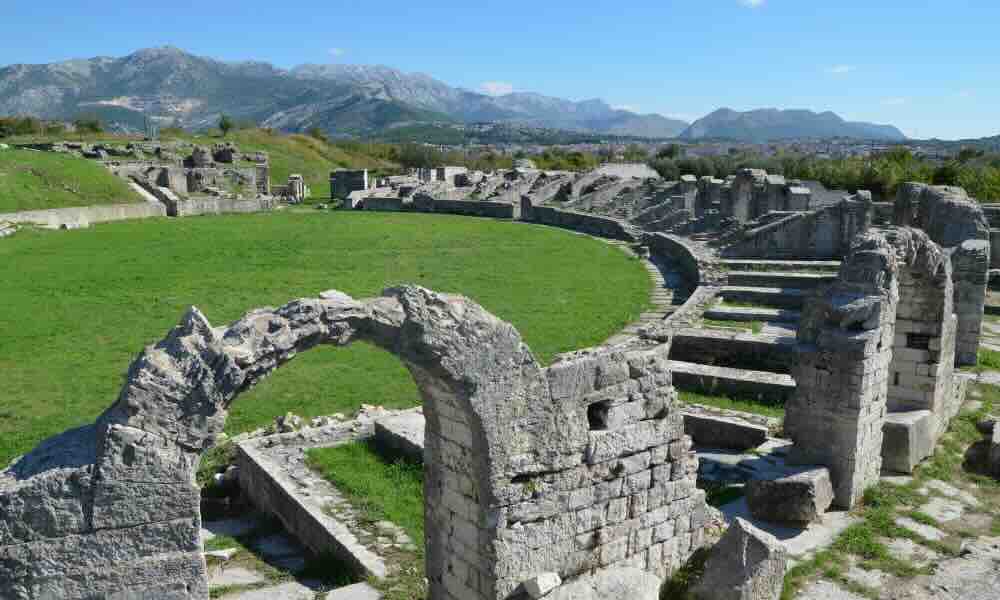
Solin sits ten minutes by bus from Split’s old town and feels like a different country. No cruise crowds, no Riva queues, no English-language ferry hawkers — just a quiet Croatian town built around the ruins of Salona, the ancient Roman capital of Dalmatia, and the cold green Jadro river that has run through it for two thousand years. This is what a slow day in Split actually looks like, if you’re willing to step half an hour off the tourist trail.
Why Solin instead of the postcard route
Most travellers in Split rotate through three things: Diocletian’s Palace, a Marjan walk, an island day-trip. Solin is the fourth option almost no one books. It’s a working town with one of the largest Roman archaeological sites on the Adriatic in its backyard, and locals here go about their day the way Split itself used to — coffee at 8, lunch at 1, swim by 5. Going to Solin isn’t a sightseeing checkbox; it’s a way to spend a day instead of a way to fill one.
Morning: arrive at Salona before the heat
Salona’s archaeological park opens around 9am. If you go in summer, get there by 9:15 — the site has almost no shade and the limestone reflects every degree of midday sun. Entry is around €5. The site itself is sprawling: amphitheatre at the north end, the ancient basilica complex closer to the river, mosaic remnants you’ll mostly have to yourself. Bring water. Bring a hat. Bring shoes you don’t mind getting dusty.
Mid-morning: walking the ruins
Allow ninety minutes to two hours. The amphitheatre — once seating 18,000 — is the dramatic photo, but the smaller details are what stay with you: the cypress trees growing through Roman walls, the stork nest on a fragmented column, the way the wind moves through a city that has been quiet for a thousand years. If you’ve already seen the Colosseum in Rome and felt the crowd press, this is the opposite experience. Same era, almost no people.
Lunch: where locals actually eat
Solin has a handful of family-run konobas where the menu doesn’t include “tourist specials” and the wine comes from the owner’s village in the Dalmatian hinterland. Look for places near the centre of town. Grilled fish, dalmatinski pršut, blitva s krumpirima (Swiss chard with potatoes, the Dalmatian comfort dish). Lunch runs €15–€20 a person; expect to take ninety minutes. Don’t ask for the bill until you’ve finished your coffee.
Afternoon: the Jadro river and Gradina
The Jadro is the river that supplies Split’s drinking water — short, fast, clear, and cold even in August. A footpath runs along sections of it; you can sit on the stone walls, swing your feet over, and watch trout move under the surface. Closer to the sea, the Solin marina and the Gradina peninsula give you green space, sea air, and a few benches with no one selling you anything.
The way back — or, why not stay
Bus 1 runs every fifteen minutes back to Split’s old town. The ride is twenty minutes; from the central bus stop you’re at Diocletian’s Palace in another five on foot. But if you’re staying in our Solin apartment, “the way back” is a five-minute walk past the Salona walls. Cold beer at home, balcony, no transit. That’s the version of this day we’d pick every time.
Where to stay if you want to repeat tomorrow
A Solin field day works as a one-off from a Split base — but it really sings if you sleep here. Quieter, greener, half the price of central Split, ten minutes from the old town when you want it. Our apartment in Solin is steps from the Salona ruins and a stroll from the Jadro. You can also use it as a flexible second night between two Split apartments, when you want a slower pace mid-stay.
Some of the best days in Croatia aren’t in any guidebook because the guidebook writer was busy taking the same photo at Peristyle as everyone else. Solin is where you go when you’ve already done that.