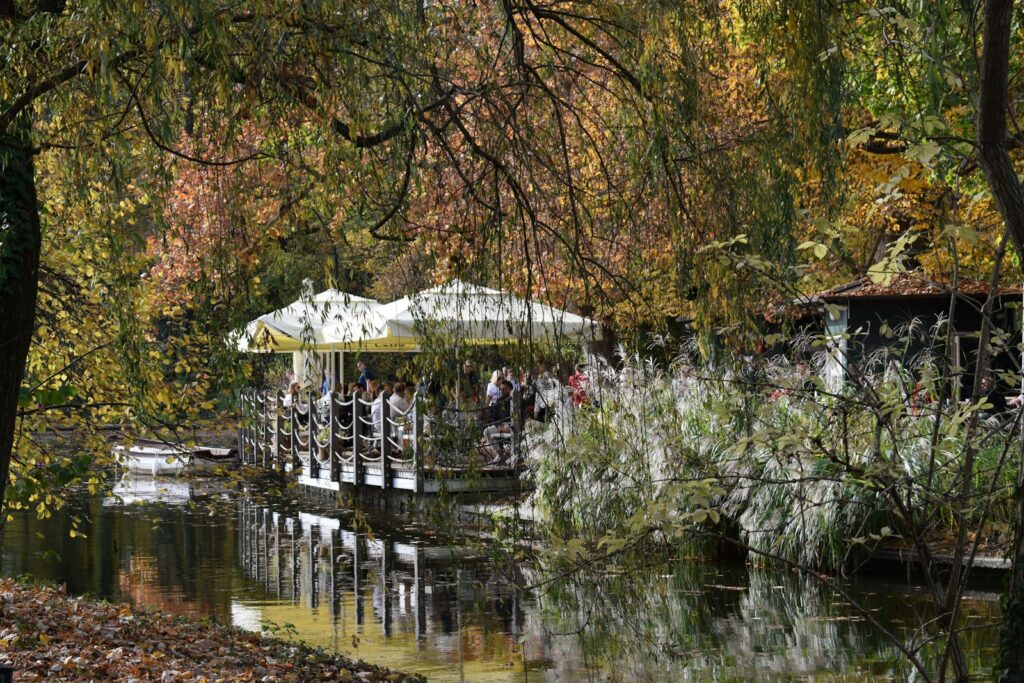
September in Split is when the locals get their city back. The cruise ships taper off after the first week, restaurants regain their breathing room, and the sea — still 23°C through mid-October — empties out almost completely. The Adriatic doesn’t shut down for autumn; the tourists do. If you have any flexibility in when you visit Croatia, late September to early November is the version of Split we’d quietly recommend over any week in July.
The water is warmer than you think
Split sits at roughly the same latitude as Florence, but the Adriatic holds heat well. Sea temperatures stay above 22°C through the first three weeks of October and only drift below 20°C in early November. People still swim at Bačvice on Halloween. The crucial thing the guidebooks miss: there’s no algorithmic cliff at “end of summer.” Pack a light sweater for evenings; bring a swimsuit anyway.
Vendima — the Dalmatian wine harvest
From mid-September into early October, the limestone hills inland from Split are deep in vendima — grape harvest. Small family wineries open their doors, the air around the konobas turns sweet with fermenting must (mošt), and you can drink wine pressed two days ago. If you’ve only known Croatian wine through the supermarket Plavac Mali, this is when you find out what it actually tastes like. The villages on the slopes of Kozjak — Klis, Konjsko, Brštanovo — are an easy half-day from Split.
Olive harvest, November
Late October to mid-November is olive season. You’ll see nets laid under trees from the road to Solin, see ladders propped against ancient trunks, and smell freshly pressed oil at the village mills. The new oil — peppery, green, almost bitter — is the kind of thing locals stockpile for the year. A litre from a small Dalmatian press is what cooking Italian food at home should taste like, but rarely does.
The light
Autumn light in Split is a separate argument for visiting. The sun sits lower, the limestone of Diocletian’s Palace turns gold for hours instead of minutes, and shadows have real architecture. Photographers know this; almost everyone else misses it because they came in July. October at 4pm on the Riva looks like a different city than August at 4pm — softer, slower, more honest.
What’s actually open
The short answer: everything that matters. Most konobas in the old town stay open year-round. The major museums (Mestrovic Gallery, the Cathedral treasury, the Archaeological Museum) keep regular hours. Ferries to Brač, Hvar and Šolta still run, though on a reduced schedule by mid-October. Klis Fortress is open until early November. The only things that close are the strictly seasonal: some beach bars, a few rooftop bars, the inflatable trampolines at Bačvice.
A weekend itinerary that doesn’t exist in summer
Imagine this: morning swim at Bačvice (yes, in October), espresso at a side-street terrace where you don’t have to wait for a table, walk through an almost-empty Diocletian’s Palace, lunch at a konoba where the owner brings out his new wine, an hour at Salona in Solin with maybe ten other people on the entire site, golden-hour photos on the Riva, dinner that ends with a complimentary glass of homemade rakija. That’s a sample Wednesday in mid-October. In August, half of it isn’t possible.
Where to stay
Autumn rates on our apartments in Split’s old town drop by more than 40% versus July — same rooms, same location, half the noise outside. Our Solin apartment near Salona works especially well in autumn, when the cooler temperatures make the long ruin walks comfortable and the local konoba scene is in full vendima mode.
Croatia in summer is what the brochures sell. Croatia in autumn is what the locals keep for themselves. Now you know.