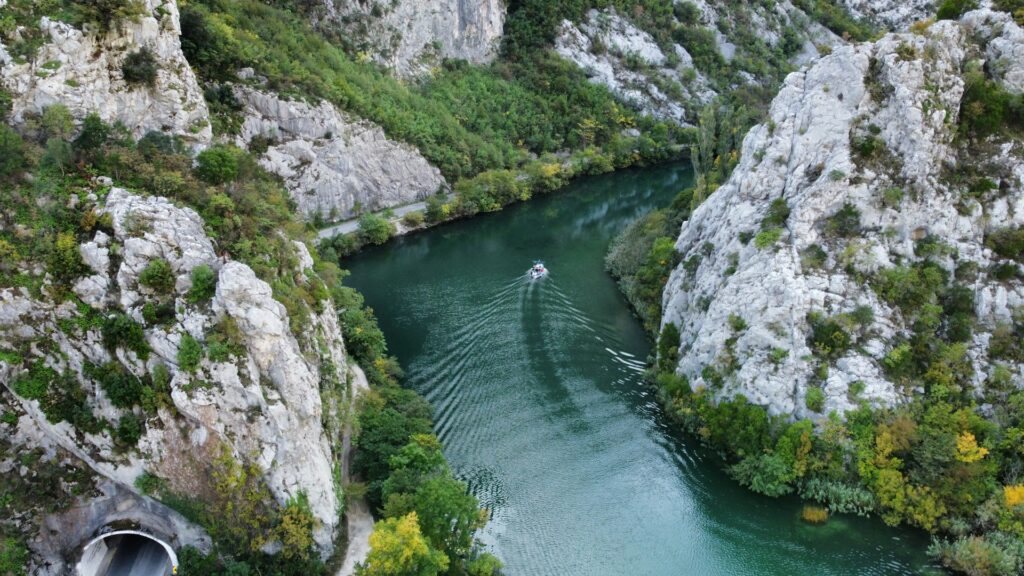
Forty minutes inland from Split, the coast disappears and Dalmatia changes character: karst fields, the emerald Cetina river, and a small proud town where, every first Sunday of August, riders in 18th-century uniforms gallop at full speed down a street aiming a three-metre lance at an iron ring the size of your palm. This is Sinj, and the tournament is the Alka — one of the oldest living traditions in Europe, and one of the best reasons to turn your back on the sea for a day.
What the Alka actually is
In 1715, the town’s defenders repelled a vastly larger Ottoman army — a victory the town attributes to Our Lady of Sinj, whose painting still watches over the sanctuary. The knights’ tournament has been run in gratitude ever since: the alkari, in original-style uniforms, charge down the course and aim their lance at the alka, a small double ring hanging on a wire. Hit the centre and the crowd erupts. It’s on UNESCO’s intangible heritage list, and it is emphatically not a tourist show — it’s the town’s identity, run by families whose names have been on the riders’ list for generations.
If you’re here for Alka weekend
The main tournament runs the first Sunday of August, with two qualifying runs — the Bara and the Čoja — on the Friday and Saturday before. Grandstand tickets for Sunday sell out, but the atmosphere in town is free: processions, brass bands, families in from every village of the Cetina valley. Go early, park where the locals wave you in, and treat the day as a festival rather than a spectacle to photograph.
The rest of the year: the museum
Can’t make the first weekend of August? The Museum of the Sinjska Alka keeps the tournament alive year-round — uniforms, weapons, film of the runs, and the kind of quiet reverence that tells you this matters. Pair it with the Sanctuary of Our Lady of Sinj and the short climb to the old Kamičak fort for a view over the town and the plain where the 1715 battle turned.
The Cetina country around it
Sinj sits in the Cetinska krajina — the green interior valley of the Cetina river, which carves emerald pools and canyons on its way to the sea at Omiš. The region is horse country (Sinj’s love of horses did not start with tourism) and table country: this is where you eat inland Dalmatia — slow-cooked lamb, arambaši (Sinj’s own stuffed cabbage), and the town’s famous rafioli pastries for the road.
A realistic day plan
Morning drive inland — consider a stop at Klis fortress, which guards the pass exactly halfway. Late morning in Sinj: sanctuary, Alka museum, Kamičak view. Long inland lunch. In the afternoon, follow the Cetina — a swim in the river’s cold green water is the inland answer to the beach. Home by early evening, against the traffic.
Why bother leaving the coast?
Because this is the Dalmatia most visitors never see — the one that fed and defended the coastal cities for centuries, from the plain below Klis to the Roman veterans’ colony at Salona. An hour of driving buys you a different country. And you’ll be back on the Riva in time for the evening stroll — our apartments in the old town make the return as easy as the departure.